

The Rise of Biomaterials: How Fashion's Material Revolution Is Reshaping Product Development
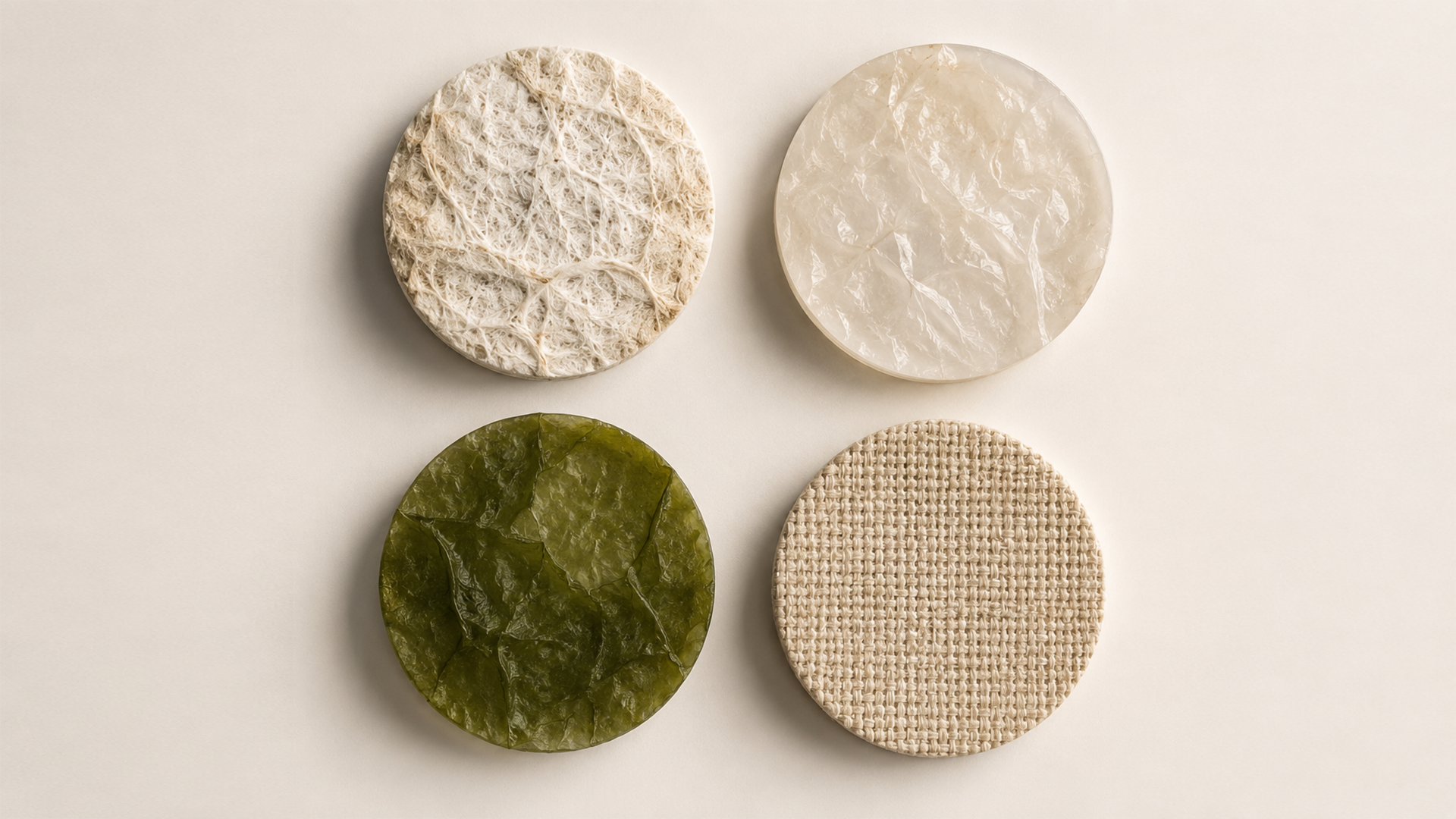
Nature has been solving design problems for billions of years. Spider silk outperforms steel by weight. Lotus leaves repel water without a single chemical coating. Mycelium builds resilient, load-bearing structures from agricultural waste.
Fashion is finally paying attention.
Across biotech startups, research labs, and design studios, a new generation of materials is emerging: not manufactured, but grown. Fungi, bacteria, and algae are being cultivated into leather alternatives, structural fibres, and sustainable pigments that challenge the very foundations of how the industry sources and develops materials.
This isn't simply a sustainability story. It's a shift in how materials are designed, developed, and brought to market.
From Biomimicry to Biofabrication
Biomimicry, designing by emulating nature's principles, has long influenced fashion in surface-level ways: waterproof finishes inspired by lotus leaves, aerodynamic structures borrowed from bird bones. What's different now is the leap from copying nature's aesthetics to recruiting nature's manufacturing systems.
This is biofabrication: living organisms as active participants in material creation.
Mycelium, the root network of fungi, can be cultivated into dense, leather-like panels that require a fraction of the land, water, and processing associated with animal leather [1]. Bacteria can produce ultra-fine cellulose fibres through fermentation [2]. Algae yield pigments, coatings, and renewable feedstocks that operate within natural biological cycles rather than extractive ones [6].
The shift is fundamental. Instead of extracting and processing raw materials, designers grow materials to specification.
Why Mycelium Has Captured Attention
Of all the emerging biomaterials, mycelium has attracted some of the most visible brand experimentation, although its path to commercial scale has been uneven.
It grows quickly, requires relatively few resources, and can be shaped into forms that mimic the texture and appearance of conventional leather. Luxury and performance brands have explored its potential not only for sustainability reasons but also because biological materials introduce aesthetic qualities that differ from both traditional and synthetic alternatives. Surface variations, organic textures, and natural irregularities can create entirely new design possibilities [1][3].
Recent research has demonstrated mycelium cultivation on agricultural and food waste substrates, pushing the material further towards circular production models [3]. Durability, flexibility, water resistance, production consistency, and cost remain active areas of development. While significant progress has been made, recent challenges within the biomaterials sector highlight the complexity of scaling promising innovations into commercially viable supply chains [7].
Researchers have also explored three-dimensional printing with mycelium hydrogels, opening possibilities for complex structural forms that extend well beyond flat sheet materials [4].
What's Coming Next
Mycelium dominates many conversations around biomaterials, but it represents just one strand of a much larger movement.
Bacterial cellulose is gaining traction for its structural strength, lightweight properties, and compatibility with fermentation-based production. Researchers are developing microbial composites that combine bacterial cellulose, fungal structures, and synthetic biology techniques, effectively engineering entirely new material classes from the ground up [2].
Algae-derived materials are being explored across pigments, functional coatings, packaging applications, and future textile systems, with growing interest from brands seeking more regenerative approaches to material sourcing [6].
Robust myco-composites are emerging as a platform for hybrid-living structural materials that sit somewhere between conventional textiles and engineered composites [5], pointing towards a future where traditional material categories become increasingly blurred.
The long-term ambition is not simply replacing one textile with a greener alternative. It is creating material ecosystems that are regenerative by default and adaptive by design.
The Product Development Challenge Nobody's Talking About
Here's where the conversation needs to shift.
Emerging biomaterials behave differently. A mycelium leather alternative drapes differently from animal hide. Bacterial cellulose introduces structural properties that do not map neatly to existing fabric classifications. Algae-derived surfaces may require entirely new finishing and construction approaches.
Traditional development processes, built around repeated physical prototyping with known materials, become expensive and slow when the materials themselves are still evolving. In many cases, these new materials are available only in limited quantities during research and development phases, making large-scale sampling impractical [7].
The brands that adapt fastest may not necessarily be those with the earliest access to new materials, but those with the processes and tools to evaluate and integrate them efficiently.
Where Digital Product Development Changes the Equation
Digital product development allows teams to explore emerging materials across multiple silhouettes, categories, and construction approaches before committing to physical development.
A new material can be evaluated across existing product ranges, helping teams understand its potential application, visual impact, and commercial viability earlier in the process. Design, development, and merchandising teams can assess opportunities and make decisions with greater confidence while reducing unnecessary sampling and shortening development timelines.
When working with materials that exist in limited quantities or are still being scaled by biotech partners, the ability to test and evaluate digitally becomes a significant advantage.
As material diversification accelerates, this capability becomes less of a nice-to-have and more of a core development competency.
Looking Forward
Material innovation is moving faster than traditional product development processes were designed to handle.
Whether the next breakthrough comes from mycelium, bacterial cellulose, algae, or technologies that have yet to reach commercial scale, fashion teams will increasingly be asked to develop products around materials with limited historical data, evolving performance characteristics, and constrained availability.
That changes the role of product development.
The challenge is no longer simply reducing samples or accelerating approvals. It is creating a development process that allows teams to explore, test, and evaluate new materials efficiently as they emerge.
The brands best positioned for the years ahead will be those that can adapt quickly, balancing creativity with experimentation and innovation with commercial reality.
The next generation of fashion materials may not be manufactured at all. They may be cultivated.
The brands that benefit most from this material revolution will be the ones whose product development processes can evolve alongside it.
At Six Atomic, we help fashion brands build the digital product development infrastructure needed for this kind of change: pattern, grading, measurement, 3D, and workflow automation that helps teams test ideas earlier, reduce unnecessary sampling, and respond faster as new materials enter the market.
Sources
[1] Jones, M., Gandia, A., John, S. & Bismarck, A. (2021). Leather-like material biofabrication using fungi. Nature Sustainability. https://www.nature.com/articles/s41893-020-00606-1
[2] Camassola, M. & Brandalise, R.N. (2026). Recent advances in bioengineering and functional applications of microbial biocomposites: integrating bacterial cellulose, fungal mycelium and synthetic biology. World Journal of Microbiology and Biotechnology. https://link.springer.com/article/10.1007/s11274-026-05021-w
[3] Wijayarathna, E.R.K.B. et al. (2025). Multilayer biocomposite vegan leather materials derived from vegetable-tanned fungal biomass cultivated on food waste. Scientific Reports. https://www.nature.com/articles/s41598-025-98361-w
[4] Gantenbein, S. et al. (2022). Three-dimensional Printing of Mycelium Hydrogels into Living Complex Materials. https://arxiv.org/abs/2203.00976
[5] Shen, S.C. et al. (2024). Robust Myco-Composites as a Platform for Versatile Hybrid-Living Structural Materials. Materials Horizons. https://pubs.rsc.org/en/content/articlehtml/2024/mh/d3mh01277h
[6] Associated Press. A designer dressed Chappell Roan with seaweed. But don't expect to find the approach in stores, yet. https://apnews.com/article/fashion-clothes-retail-biomaterial-seaweed-mushroom-leather-a175c38aa146764e788c0b65f2f80661
[7] Vogue Business. Weighing the future of fashion's alternative materials, post-Mylo. https://www.vogue.com/article/weighing-the-future-of-fashions-alternative-materials-post-mylo