

The New Exposure: Why Naked Dressing Keeps Returning
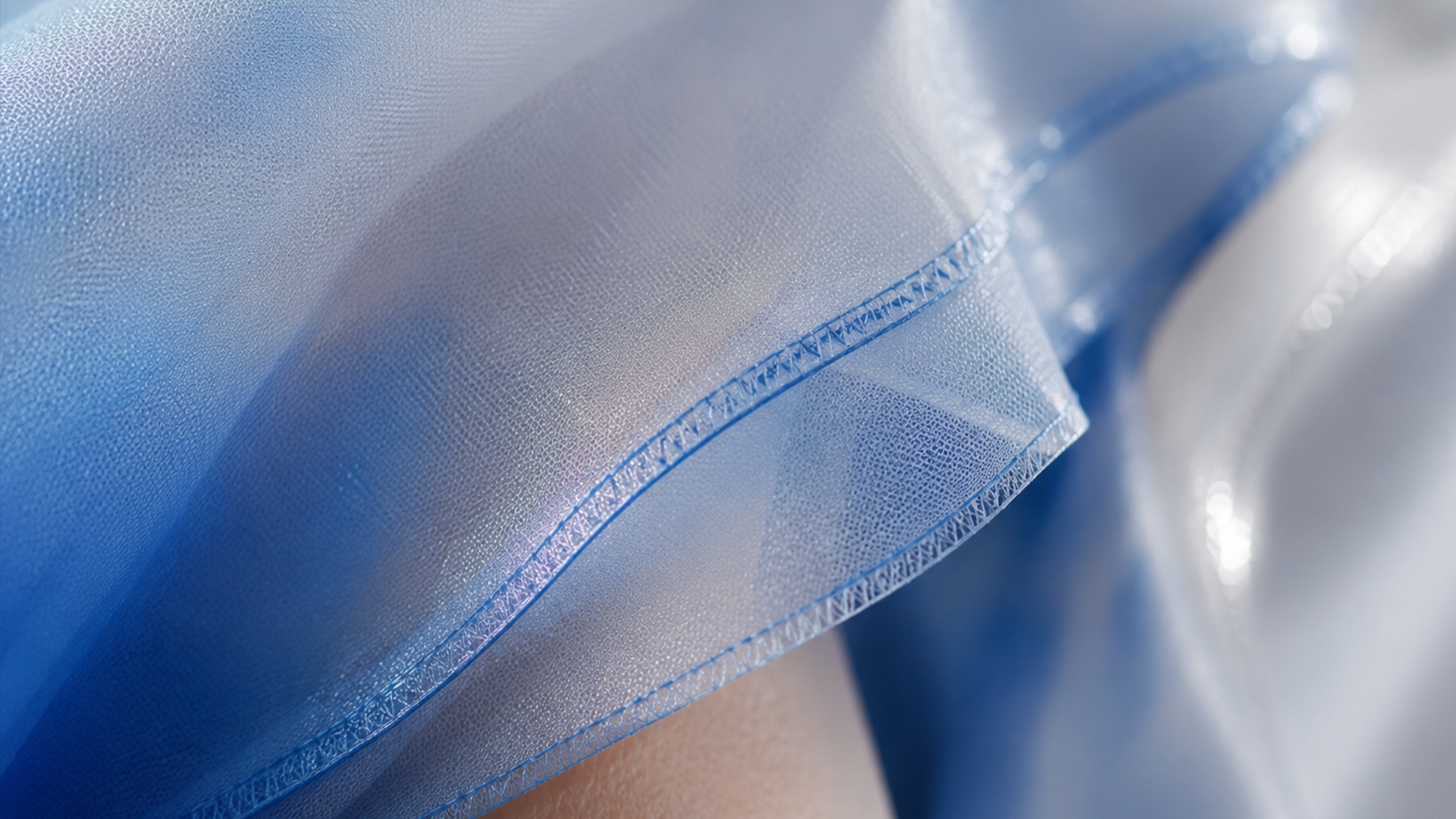
From Cher's barely-there Bob Mackie gown in the 1970s to the sheer lace silhouettes dominating 2026 red carpets, naked dressing has never really disappeared. It simply evolves with the culture around it.
What once felt scandalous now feels almost expected. Transparency, exposed skin, illusion fabrics and strategic cut-outs have become a visual language of modern fashion. At this year's awards season alone, celebrities arrived in embroidered mesh, translucent layers and body-contouring silhouettes that blurred the line between clothing and performance. Even attempts to push back, like Cannes' renewed calls for stricter dress codes, only amplified the conversation.
But naked dressing has never really been about nudity. It is about precision, visibility and the increasing pressure on brands to turn highly technical garments into scalable commercial products.
Visibility as Luxury
Fashion has always mirrored status, and today the body itself has become part of that equation. In an era shaped by cosmetic enhancement, wellness culture and hyper-visible social media identities, the body is increasingly treated as something curated, optimised and displayed. Naked dressing amplifies that reality. It removes the distance between garment and wearer, turning the silhouette itself into the statement.
Paradoxically, many of these looks are among the most technically demanding in fashion today. The illusion of "barely dressed" requires invisible mesh, precision grading, tension-sensitive fabrics and strategic embroidery placement that must all work together flawlessly across different body types. What appears effortless is rarely anything but.
Designed for the Algorithm
Modern fashion no longer exists solely on the runway. It lives simultaneously on TikTok, Instagram, e-commerce platforms and campaign imagery, and garments are now expected to perform across all of these environments at once.
Naked dressing thrives here because it is instantly legible at any scale. Sheer fabrics interact dramatically with flash photography. Cut-outs create recognisable silhouettes in thumbnails. Transparency generates movement, tension and conversation in a single frame. In many ways, naked dressing is algorithm-aware fashion.
This also creates a speed problem. Trends that ignite online can peak and fade within weeks. A brand that takes six months to move a sheer dress from concept to production floor is not competing in the same race as one that can do it in a fraction of that time. The window between cultural moment and commercial opportunity has never been narrower.
The Infrastructure Behind Minimalism
One of the persistent misconceptions in fashion is that minimal garments are simpler to produce. The opposite is often true. Transparent fabrics expose every seam, tension point and grading inconsistency. Stretch materials behave differently across body types. There is nothing to hide behind, which means there is nowhere for technical error to hide either.
This is where the gap between creative ambition and operational reality becomes most visible. Grading a sheer bodysuit across twelve sizes is a fundamentally different challenge from grading a structured blazer. Predicting how a bias-cut mesh will behave on a body that was never in the fitting room requires a different kind of tooling entirely. And when sampling is expensive and lead times are long, the cost of getting it wrong compounds quickly.
At Six Atomic, this is exactly the kind of problem we are built to solve. Our AI grading technology automatically scales patterns to a brand's exact size specifications, including custom-fit workflows based on real body measurements, while reducing the manual grading work that traditionally slows production. What normally takes days of technical iteration can be accelerated significantly, while keeping grading logic consistent across a size run.
For supported libraries and enterprise-trained categories, this creates a more scalable way to approach garments where fit is the entire product. The challenge is not simply creating a visually striking sample, but maintaining the garment's integrity across multiple sizes and body types.
Sampling Less, Selling More
The traditional sampling process is one of fashion's most stubborn bottlenecks. Multiple rounds, long waits, expensive corrections. For minimal and body-contouring styles, the stakes are even higher because there is less room for interpretation. The garment either works on the body or it does not.
Six Atomic's automated 2D-to-3D workflow capabilities help change this equation. By automating setup processes like layering, sewing relationships and simulation preparation, teams can evaluate drape, cut-out placement and tension earlier through faster 3D simulation workflows before committing to physical sampling. Fewer samples can mean shorter timelines, lower costs and greater creative flexibility without the financial penalty that usually comes with experimentation.
Combined with body-measurement inference and validation workflows that can bring diverse body measurements into pattern and avatar workflows earlier, brands can design with a broader customer base in mind from the start, rather than retrofitting inclusivity later in the process.
Beyond Shock Value
It would be easy to dismiss naked dressing as attention-seeking, but its longevity suggests something more complex. Sometimes it represents empowerment. Sometimes performance. Sometimes rebellion. Sometimes simply aesthetics. The meaning shifts depending on the wearer, the designer and the cultural climate around it. That ambiguity is precisely why the trend keeps returning.
Fashion cycles back to the body because the body remains one of the most emotionally charged and culturally loaded forms of expression we have. Naked dressing sits at the intersection of vulnerability, confidence, spectacle and control, making it endlessly adaptable to each generation's anxieties and ambitions.
The brands best positioned to work in this space will not just be the ones with the strongest creative vision. They will be the ones who have built the operational infrastructure to match it. The ability to move fast, grade accurately, sample less and fit more people is not simply a production advantage. It is a creative one.
The most powerful thing a garment can do is disappear into the body it was made for. Building that precision at scale is what the next era of fashion is really about.
Sources
The New York Times — "Naked Dressing" on the 2026 Red Carpet
Newsweek — Why the Naked Dress in 2026 Isn't Naked at All
Vogue UK — Naked Dressing and the New It-Girl Uniform
Marie Claire — Miu Miu's Fall 2026 "Vibe Shift"
Marie Claire — The New Naked Dress Trend at the 2026 Met Gala
InStyle — The Most Iconic Naked Dresses of All Time
Coveteur — The 2026 Met Gala's Naked Dressing Obsession