

The Aestheticisation of Workwear
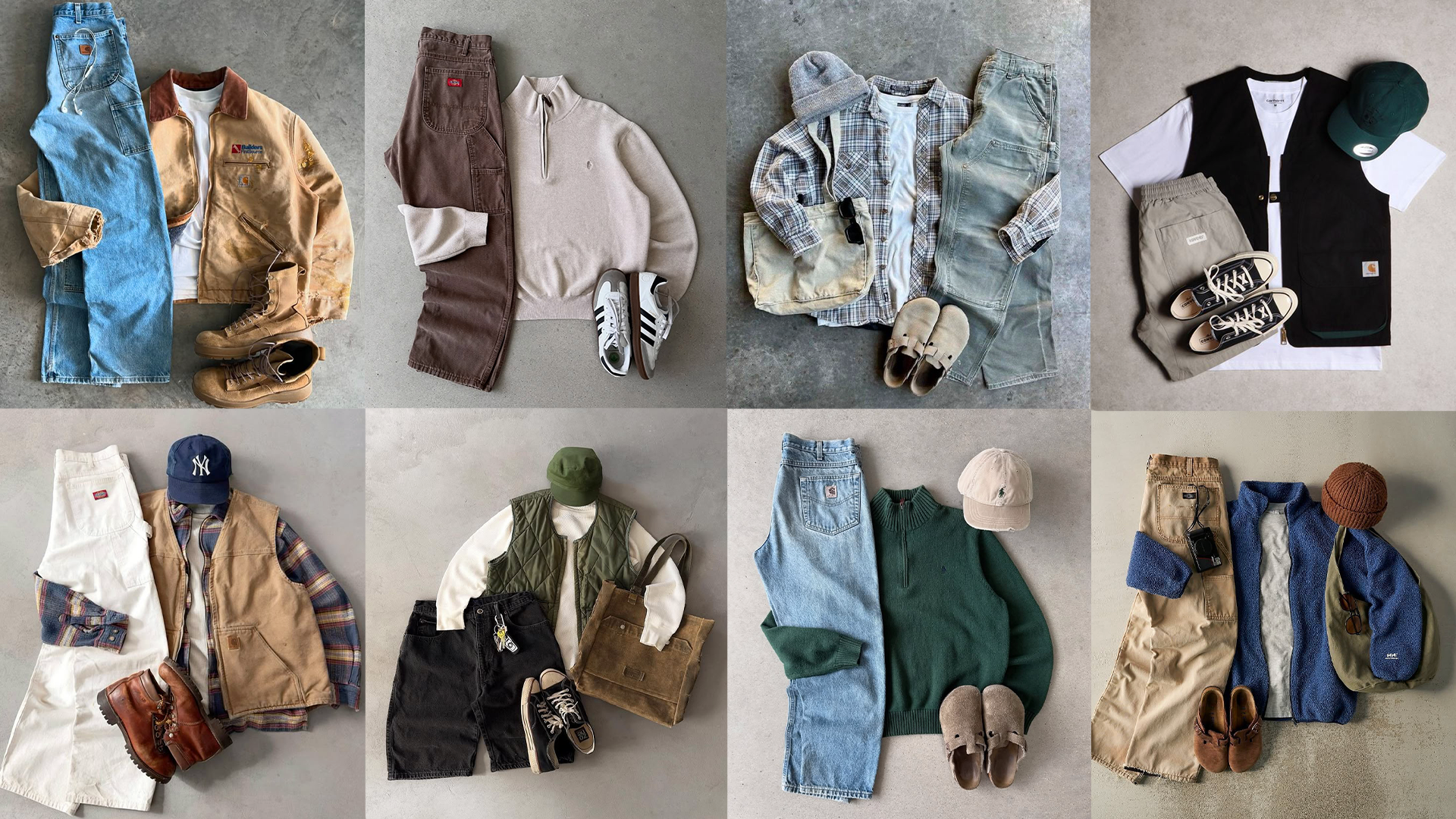
From carpenter trousers to chore coats, workwear has become one of fashion’s most durable visual languages. Garments built for labour now appear on runways, in resale markets, and in mainstream wardrobes. For apparel brands, this is more than a styling trend: it creates a recurring product-development challenge. Teams are expected to reinterpret utility archetypes at fashion speed without losing fit consistency, grade integrity, or production efficiency.
How Utility Became a Fashion System
Brands like Carhartt and Dickies built their names on clothing engineered for durability. Over time, those pieces migrated into skate, hip-hop and punk communities, where toughness and affordability resonated with youth culture. Major fashion labels including Celine, Vetements and Stella McCartney eventually followed, sending uniforms and boiler suits down the runways.¹ Today the references are even more direct. Prada, Miu Miu, Fendi and Louis Vuitton have all put chore coats centre stage,² reinterpreted in refined fabrics while keeping the silhouette unmistakably intact.
Vintage culture has deepened that shift. Thrifting and resale platforms have turned authentic workwear into sought-after objects, and the appeal is largely about what manufactured newness cannot replicate. As Chris Gove, founder of British menswear brand Percival, put it: “The appeal of workwear is that it doesn’t date. It was never designed for a particular era or movement, so the purpose and appeal of workwear remains relevant, transcending trends.”³ Worn canvas, faded denim and softened twill carry a visible history. In a fashion landscape criticised for disposability, that patina has become a form of credibility.
Why Product Teams Feel the Pressure
For product and technical teams, the opportunity and risk arrive together. Workwear-inspired products look simple, but they depend on proportion-sensitive construction details that are easy to destabilise during adaptation. When brands develop multiple variations of the same archetype across fabrics and fits, small pattern changes can cascade into grading inconsistencies, sampling delays, and avoidable rework.
Designers rarely copy workwear directly. Instead, they reinterpret its structure. A carpenter pant becomes a wide tailored trouser; a mechanic jacket appears cropped in leather or wool. Functional details like patch pockets, panel seams and boxy cuts stay recognisable, while materials and proportions evolve. Small decisions drive the transformation: adjusting pocket scale, sleeve width, or garment length can shift a purely utilitarian piece into a fashion statement.
What looks effortless on the rack is usually the result of a disciplined pattern workflow. Teams need to start from a stable base block, generate controlled style variations, preserve seam logic across materials, and grade reliably across the full size range. They also need clean downstream outputs for production teams, including tech pack-ready and 3D-ready assets. This is where Six Atomic is most useful in practice: automating grading and pattern organisation so design, technical design, and production teams work from the same pattern truth. That reduces manual rework, improves cross-size consistency, and shortens the path from concept to production.
Workwear endures because its design logic is clear: these garments were built to perform, and that clarity translates into modern fashion. But for brands, the competitive edge now comes from execution, not inspiration alone. The teams that can reinterpret functional archetypes quickly while maintaining fit and grading consistency will move faster with less waste. If your team is rebuilding the same workwear blocks each season, this is the right time to audit your pattern-development workflow.
Sources
1- https://www.inputmag.com/style/workwear-carhartt-dickies-fashion-trend-history
2- https://www.vogue.com/article/chore-coat-trend
3- https://www.esquire.com/uk/style/a38765/workwear-fashion-trend/