

Texture Is the New Print. The Swatch Is the Problem.
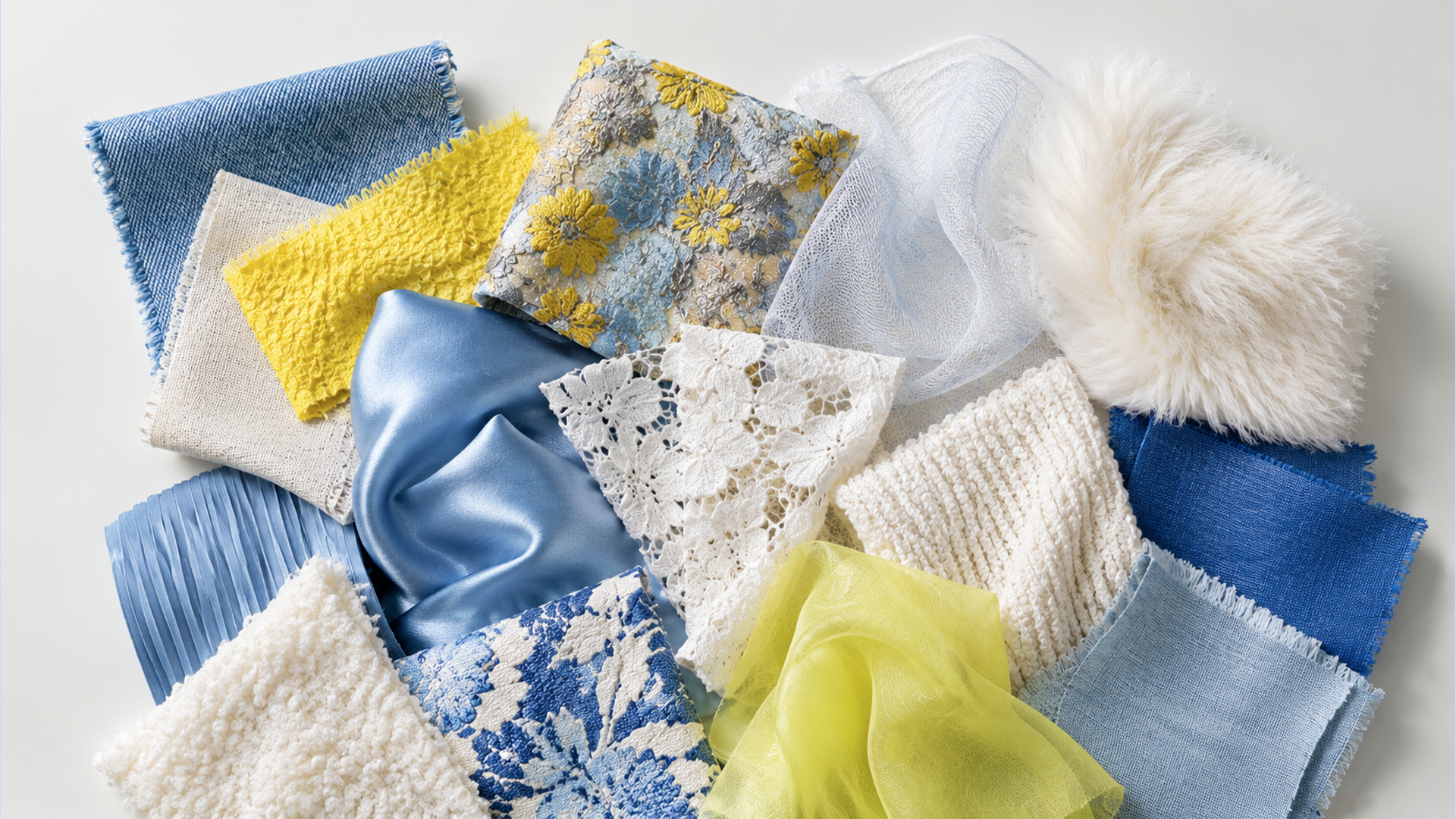
The swatch is one of the most misleading objects in fashion development.
It is a small square of cloth, usually presented under ideal lighting. It shows you how a material looks, but very little about how it behaves once it has been cut, stitched, weighted and worn. A print can be assessed visually on a flat surface, even if placement and matching still need to be resolved. Texture introduces another variable: the physical behaviour of the material itself.
Texture is becoming an increasingly important way for designers to create distinction without relying solely on bold colour or graphic prints. Bottega Veneta, The Row and Prada have explored tactile contrasts, layered fabrics and dimensional surfaces, while richly embellished collections have brought brocade, jacquard, embroidery and beading back into focus.[1][2] The creative possibilities are clear. The development challenge is less visible.
When the fabric becomes the statement
Print puts an image on a surface. Texture changes the surface itself. A graphic creates contrast through colour and composition. A textured fabric creates it through weave, pile, structure, transparency and the way it catches light. Two materials in the same colour can therefore produce entirely different visual effects.
Four techniques illustrate the challenge.
Rich weaves and brocade carry pattern in the cloth itself, making weight, stiffness and drape important considerations when developing the cut.
Pile, faux fur and shearling add volume and surface direction, affecting seam construction, cutting layouts and the proportions of the finished garment.
Three-dimensional embellishment turns the surface into the design. Placement, weight and attachment influence construction sequencing and how the garment hangs.
Contrasting materials build complexity through differences in sheen, opacity and movement alone: satin against wool, leather beside fine knitwear, or organza over a substantial base. Each combination introduces different material behaviours that need to be considered during development.
Every one of these techniques can look convincing on a swatch. None can be fully evaluated there.
What the swatch can't tell you
Consider a structured brocade jacket. The fabric may have enough body to support a sculptural silhouette, but its thickness can create bulk at seams and intersections. Seam allowances, facings and interfacing may need to be reconsidered, while a repeating motif might need to align across seams, sleeves and pockets for the finished piece to look intentional.
High-pile fabrics introduce directional considerations that affect how pattern pieces are laid out and cut. Depending on the material and design, directional cutting and motif matching can also increase fabric consumption. Embellishment presents another challenge: a dress with dense appliqué may look balanced on a design board but hang differently once the additional weight is distributed across the body. Late alterations can be particularly difficult when they disturb carefully placed surface details.
We explored how one silhouette changes across different fabrications in One Garment, Three Lives. Texture introduces a related challenge within a single garment: one material can influence the pattern, construction and final appearance at every stage of development.
Print travels. Texture doesn't.
A print can often be evaluated visually and reproduced through established printing processes, although placement, scale and repeat matching still require attention. Texture adds another layer of complexity because the surface must behave as intended, not simply look correct.
A brocade needs to hold the right structure. A pile fabric needs to maintain its intended volume and direction. An embellished garment needs to hang properly despite the additional weight and construction requirements. Getting these details right depends on the interaction between the fabric, pattern, construction and finishing decisions behind the finished product.
That creates a less obvious competitive advantage. When material is central to a garment's identity, the ability to develop it consistently becomes as important as the original design idea.
Moving the test earlier
If the swatch cannot tell the whole story, more of the evaluation needs to happen earlier in development.
Three-dimensional garment simulation allows teams to assess silhouette, drape and the interaction between design components before cutting a physical sample. It can help evaluate whether a structured fabric maintains a sculpted line or whether a sheer overlay falls as intended over a heavier base.
The reliability of that assessment depends on the accuracy of the fabric properties and simulation settings. Research comparing physical and virtual fabric drape has shown why material parameters matter when reproducing the behaviour of real textiles in a digital environment.[3]
The limitations matter, too. A simulation does not automatically reproduce every property of a physical textile. The exact hand of a brocade, the behaviour of a high-pile surface or the additional weight of embellishment may still require physical testing and sample validation.
The goal is not to replace physical testing altogether. It is to use digital evaluation to explore options, identify potential issues earlier and make better-informed decisions before committing to the next development stage. Keeping design information, patterns and measurements connected across digital and physical workflows helps teams manage those decisions more consistently.
Three questions before you commit to a surface
What does it change in the pattern? Bulk, motif matching, cutting direction and added volume can all affect pattern development and construction.
What does it do to cost and material consumption? Cutting layouts, specialised construction, hand-applied details and late alterations can all add to the resources required to develop a garment.
What can't we see yet? Hand, weight, surface direction and material behaviour may require physical testing before a design can be fully validated.
Designing beyond the surface
Texture can make a familiar silhouette feel new, give a restrained palette depth and lend a garment identity through material alone. It also moves important development decisions upstream. The more a design depends on its surface, the earlier that surface needs to be considered alongside pattern, construction and fit.
This is where connected product-development workflows become valuable. By linking pattern development, grading, 3D simulation and workflow automation, Six Atomic helps fashion teams coordinate the technical decisions that turn a creative concept into a product ready for production.
The brands that make the most of texture won't necessarily be the ones that source the most distinctive fabric. They'll be the ones that understand what it does to a garment and can evaluate that early enough to act on it.
SOURCES
Fathia Olasupo, “How Texture Is Replacing Colour as the New Statement in 2026 Dressing,” Omiren Styles. Read the article.
Apparel Resources, “Decadence Is Back: Inside Fashion's Fall/Winter 2026 Opulence Revival.” Read the article.
S. Youn et al., “Comparative study of physical and virtual fabric parameters: physical versus virtual drape test using commercial 3D garment software,” The Journal of The Textile Institute. Read the research.